Direct-to-consumer telehealth · 2026
Nire: launching a regulated telehealth site fast and clean.

The problem
A site that could sell, but could not launch
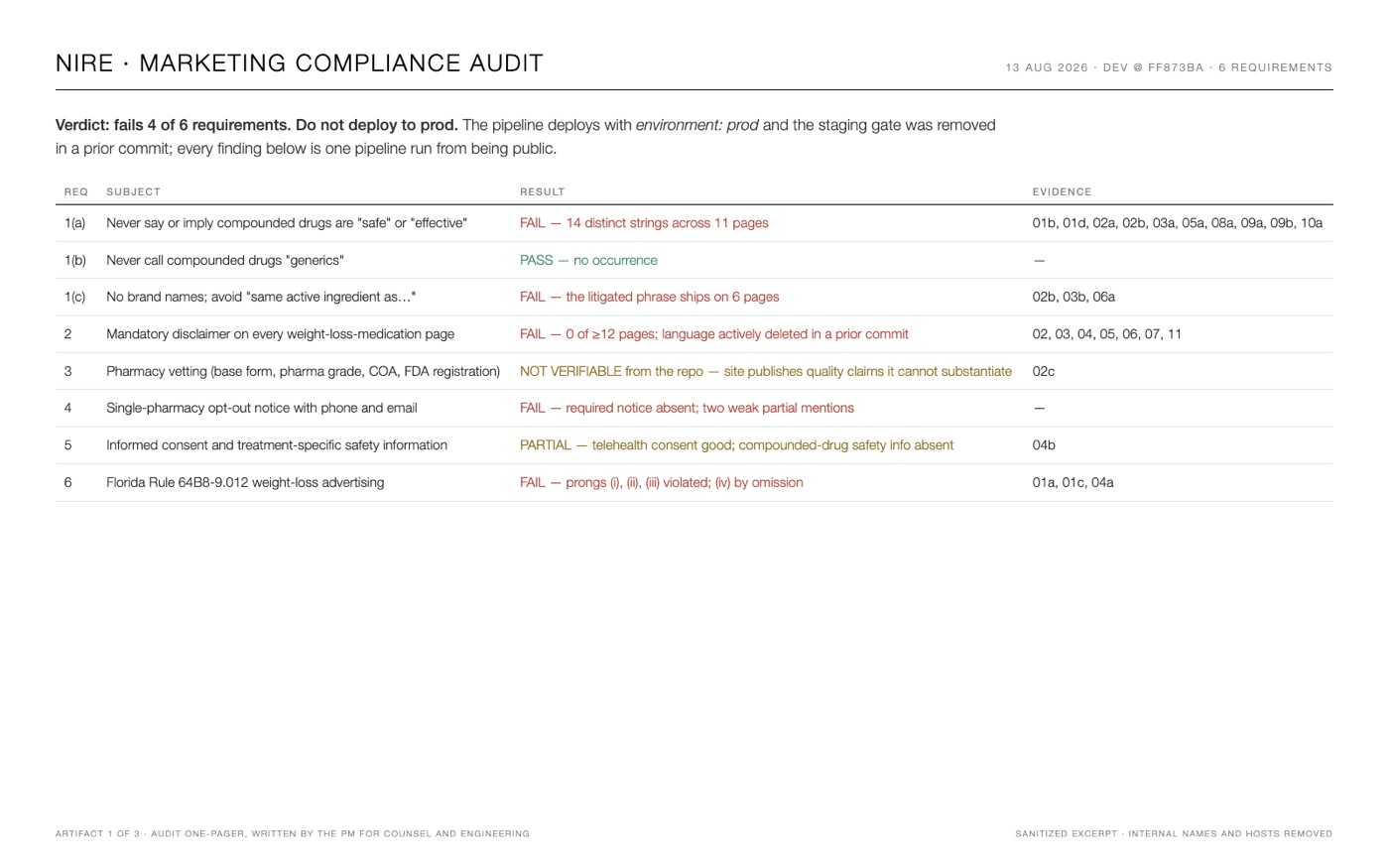
Nire sells online care for weight management (compounded GLP-1s), hormone therapy, and sexual health. Paid acquisition was ready to start. The marketing site was not: the pre-audit build described compounded medications as "safe" and "evidence-based", promised "the same active ingredient" as branded drugs, showed a 4.7-star rating with 2,400 reviews that did not exist, and carried none of the disclosures the category requires.
The CI pipeline deployed straight to production. Every one of those claims was one merge away from being public under the brand's name.
Why it mattered
In telehealth, trust is the conversion funnel
Compounded drugs are not FDA-approved, so claims of safety or efficacy are not marketing choices, they are legal exposure. Regulators had already moved against telehealth brands for exactly this pattern of claims and fake social proof. The same words that create risk also decide whether a patient trusts the brand enough to start an evaluation.
So the question was not "how do we soften the copy". It was: how does Nire launch on time with a site that is both compliant and convincing, and stays that way after launch when nobody is looking?
- Regulatory. Six marketing best-practice requirements from counsel, FTC substantiation rules, the fake-reviews rule, and Florida's weight-loss advertising rule.
- Commercial. Paid social traffic was budgeted. Every week of delay was spend not deployed and a partner intake not fed.
- Trust. Patients read the disclaimers. Real safety information and honest claims convert better than invented stars for a medical purchase.
- Durability. A compliant disclaimer had already been deleted once in a routine commit. Without guardrails the fix would not survive the next release.
Goals and success criteria
Define "launch-ready" so everyone could check it
I turned the legal input into product acceptance criteria that engineering, counsel, and marketing could each verify, and I wrote down what was out of scope so the launch did not expand.
- Zero prohibited claims on any page: "safe", "effective", "proven", "same active ingredient", "evidence-based" on compounded products. Verified by an automated check, not by reading.
- Mandated disclosures present on every weight-loss medication page: the brand and compounded-drug disclaimer, the Florida consumer bill of rights, per-product safety information.
- No social proof the business cannot substantiate: ratings, review counts, testimonials, certification seals.
- Guardrails in the pipeline so a future edit cannot reintroduce a banned claim or delete a disclaimer unnoticed.
Out of scope
Checkout and intake (owned by the partner product); pharmacy vetting and the substantiation file (business tasks, tracked but not blocking).
Approach
Audit, prioritize, fix once, lock it in
Five steps, each producing an artifact the next step could act on. I built the site changes myself with AI coding agents, which turned the usual hand-off between product and engineering into a same-day loop: write the acceptance check, generate the change, review it in the browser against the tracker, merge.
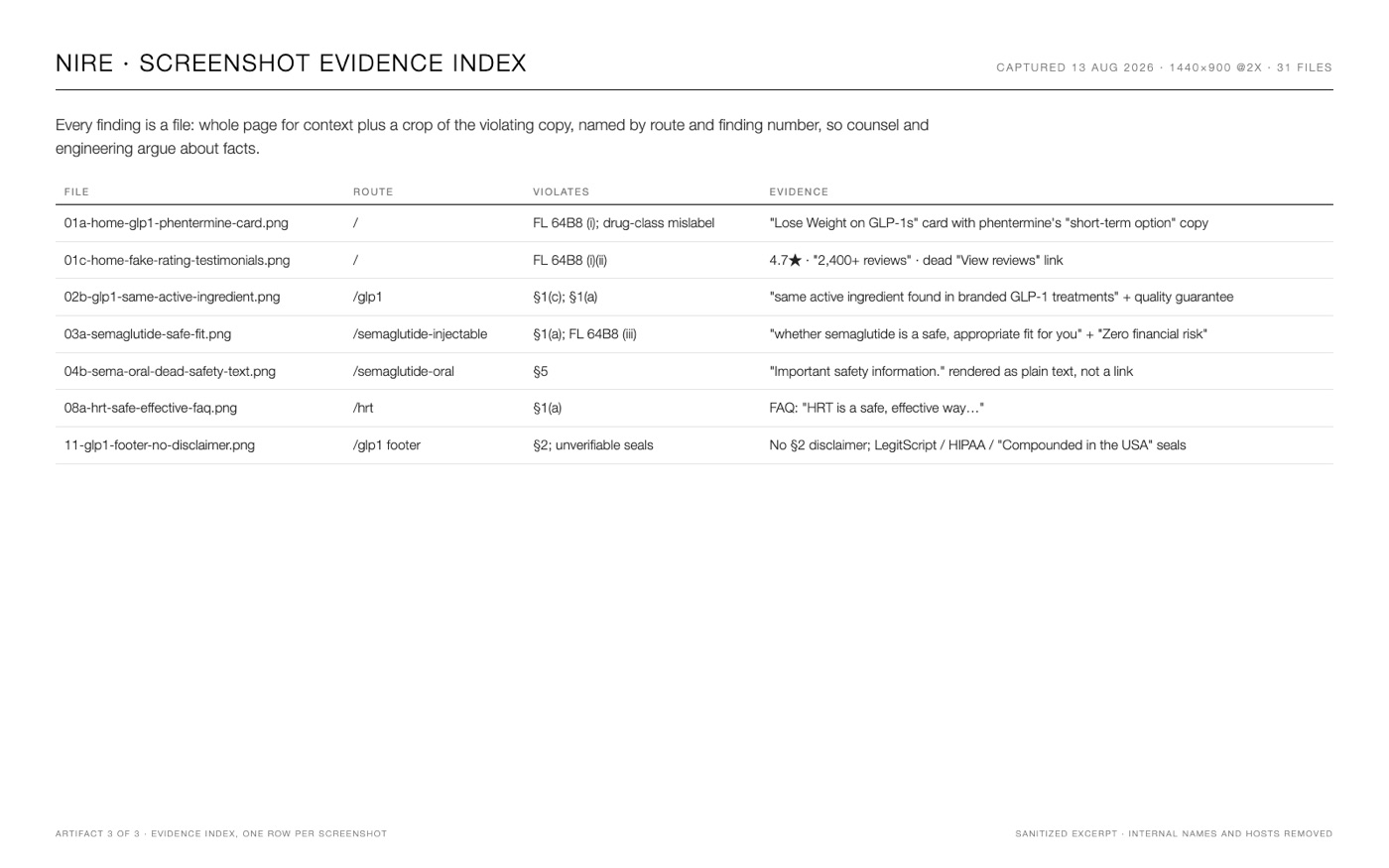
- 1. Evidence-based audit. Every page checked against the six requirements. Each finding captured as a screenshot with route, rule, and file, so the conversation with counsel was about facts.
- 2. Prioritize by exposure. P0 blocks any public deploy, P1 blocks marketing spend, P2 is hygiene. Four of six requirements failed; the P0 list was short enough to finish in days.
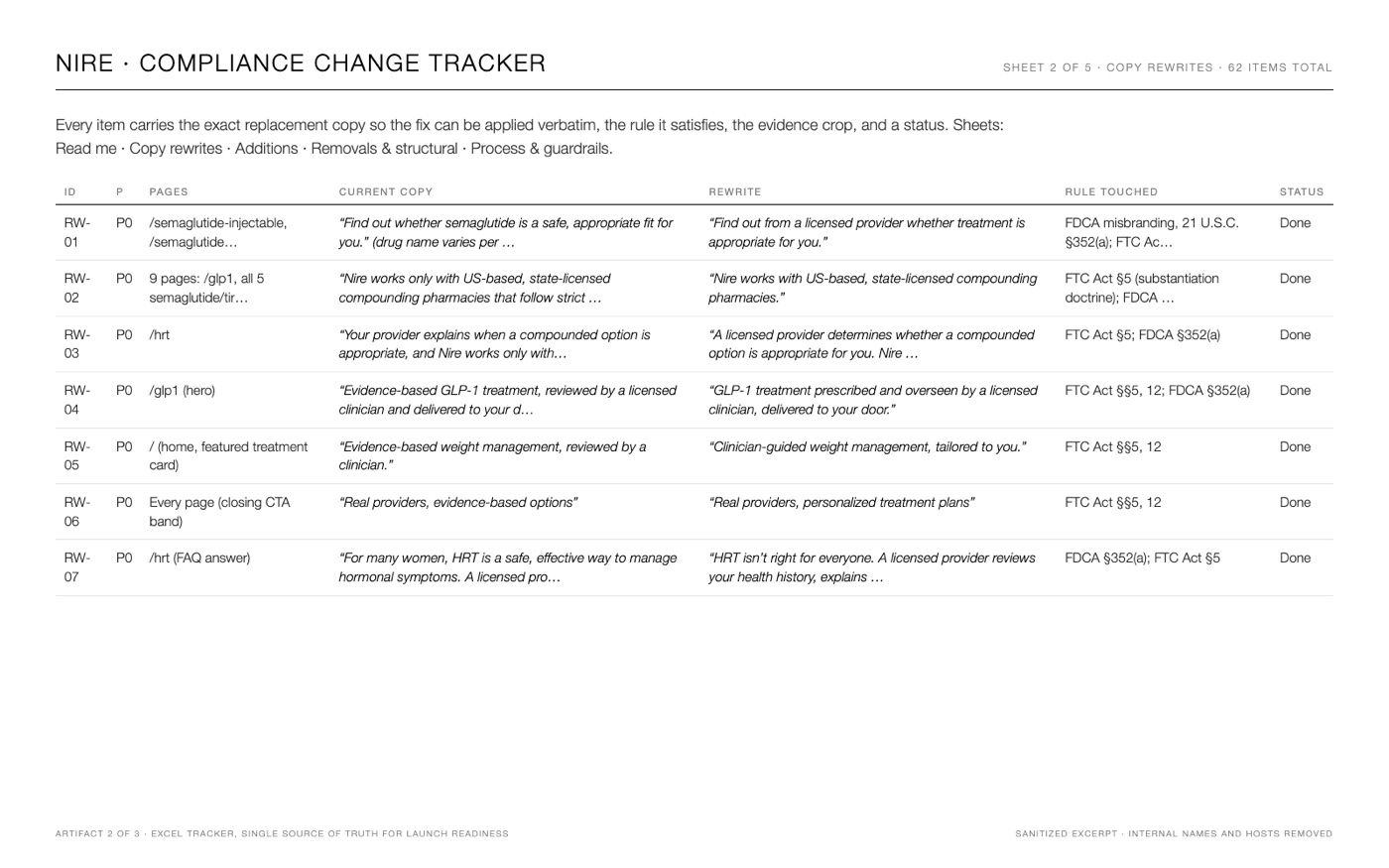
- 3. One tracker. 62 items across copy rewrites, additions, removals, and process, each with exact replacement copy and status. It was the single source of truth for launch readiness.
- 4. Fix at the source. Copy lives in shared content fixtures, so one rewrite cleared the same claim on up to nine pages, and the design system kept every fix visually consistent.
- 5. Guardrails. The banned-claims list became a CI test; the review checklist lives next to the code.
Key decisions
Remove, replace, or add: the trade-offs
Compliance work is a series of product decisions, not a find-and-replace. These were the ones that shaped the launch.
- Remove testimonials rather than replace them. There were no real reviews yet. A smaller home page with honest claims beat inventing social proof, and the section returns the day verified reviews exist.
- Drop the trust seals until they are earned. LegitScript certification was not in place. A seal that links nowhere is a liability, not reassurance.
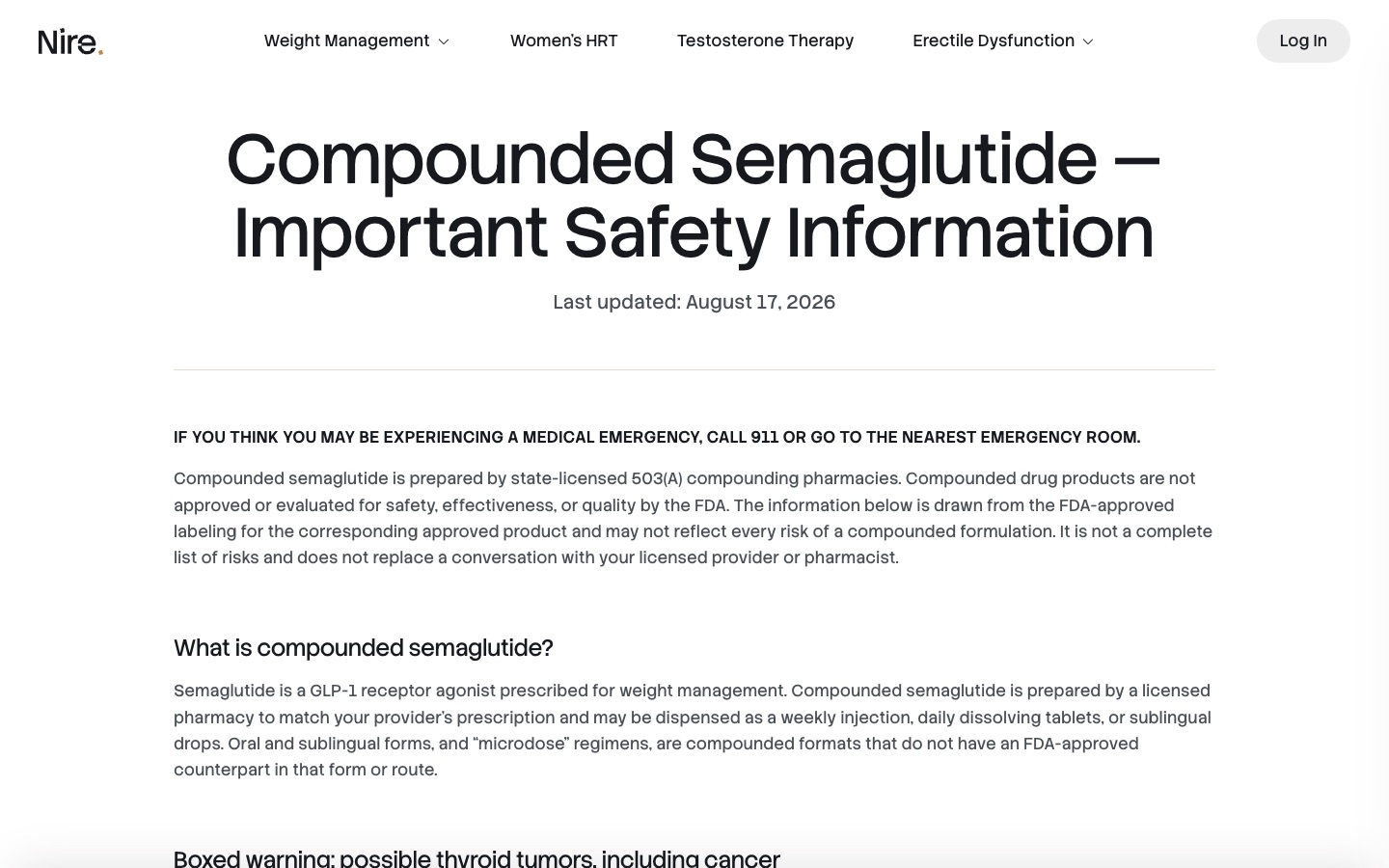
- Add safety pages instead of footnotes. Patients were promised "important safety information" that rendered as plain text. Six real pages cost more than a link, and they are the most trust-building content on the site.
- Rewrite claims to describe the process, not the outcome. "Prescribed and overseen by a licensed clinician" is true, specific, and still a strong reason to start.
- Ship the disclaimer everywhere, not just where required. One footer component, one placement decision with the client, no per-page audit ever again.
Outcome
Launch-ready, and it stays that way
The site cleared every P0 and P1 item. The remaining tracker items are business inputs (pharmacy contact details, the substantiation file), tracked with owners and not blocking launch.
What patients see now
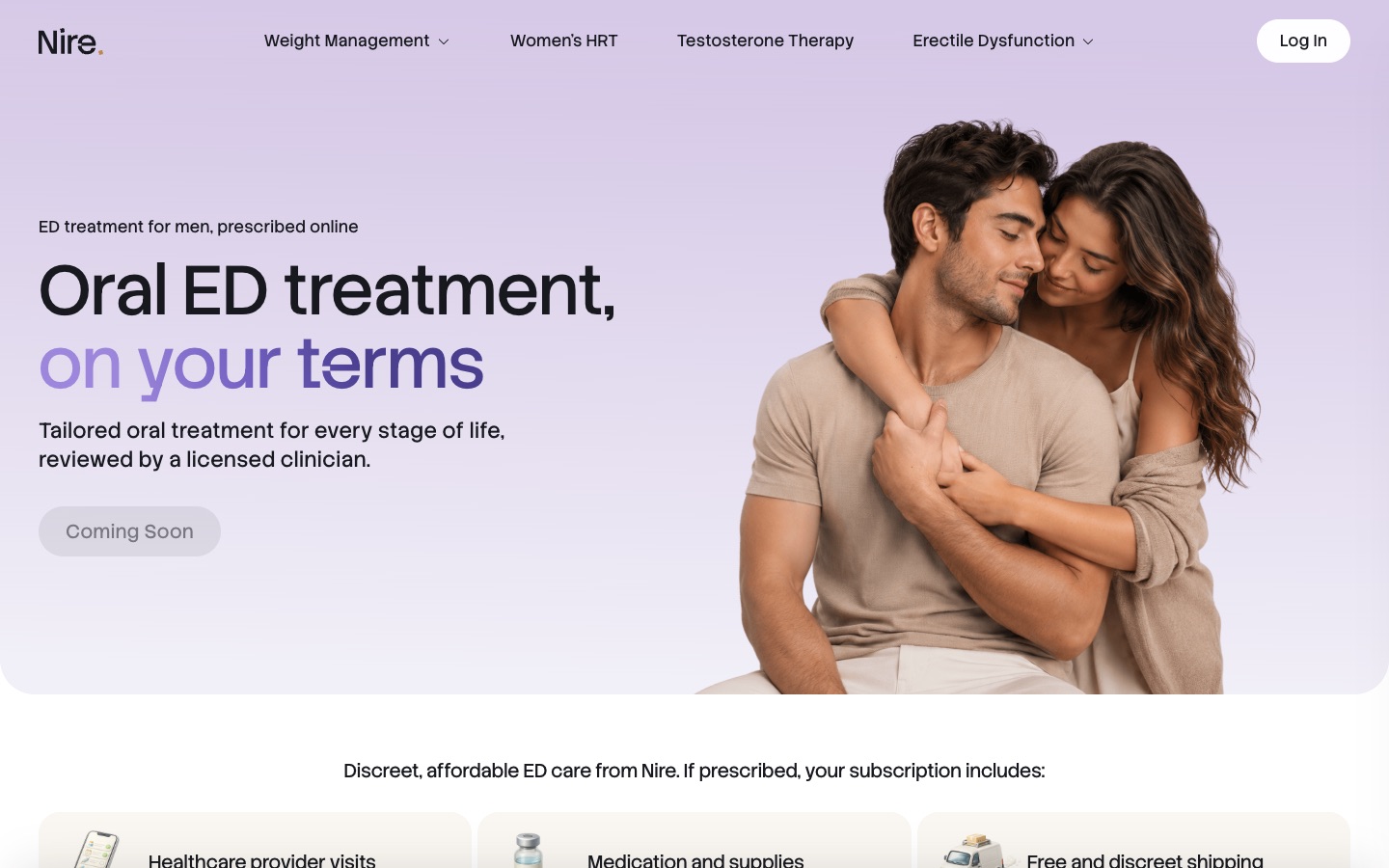
Home
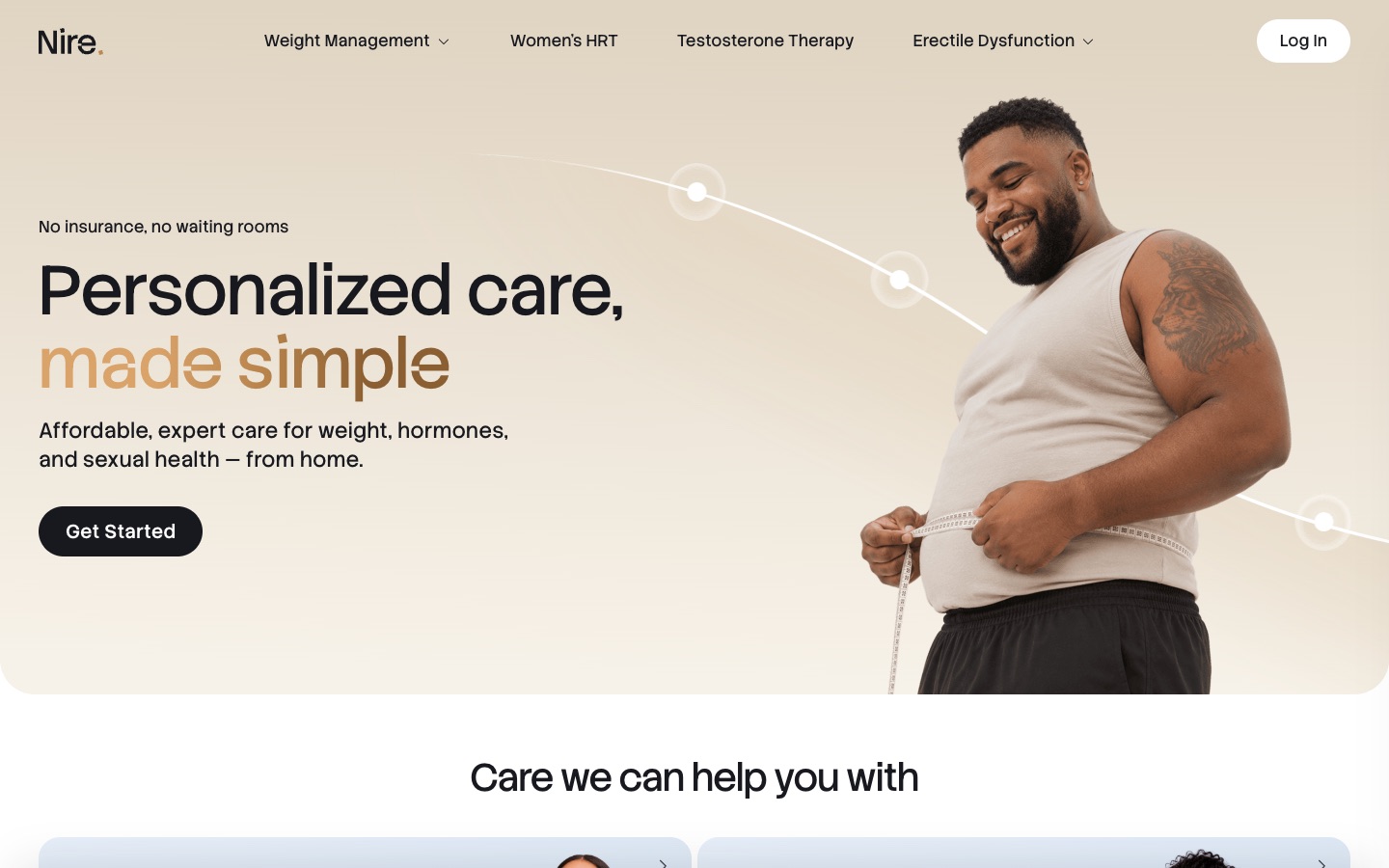
One hero message, the four treatment areas, clinician-led claims only. The rating widget and testimonials are gone; the footer carries the mandated disclosure.

What patients see now
Weight care
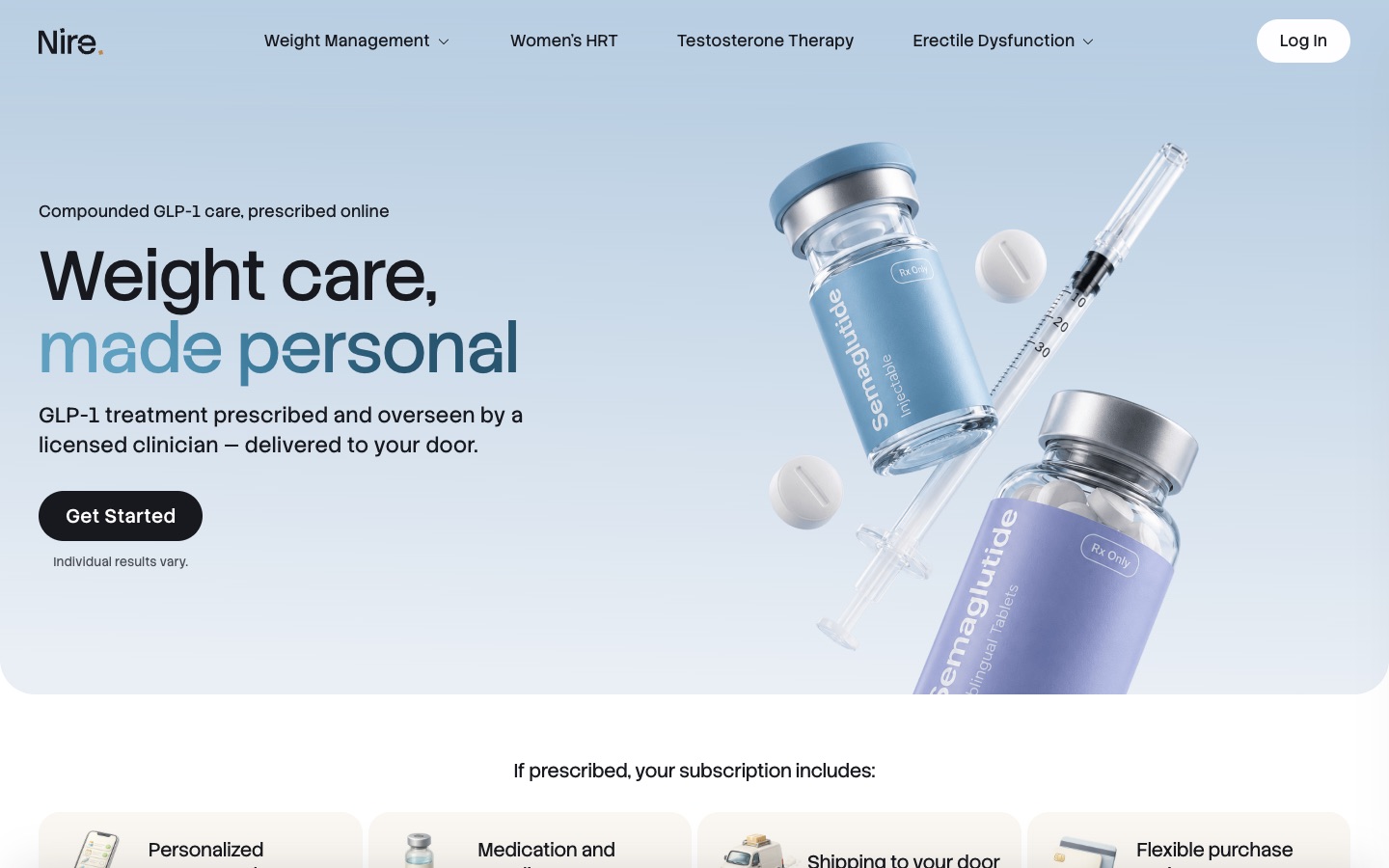
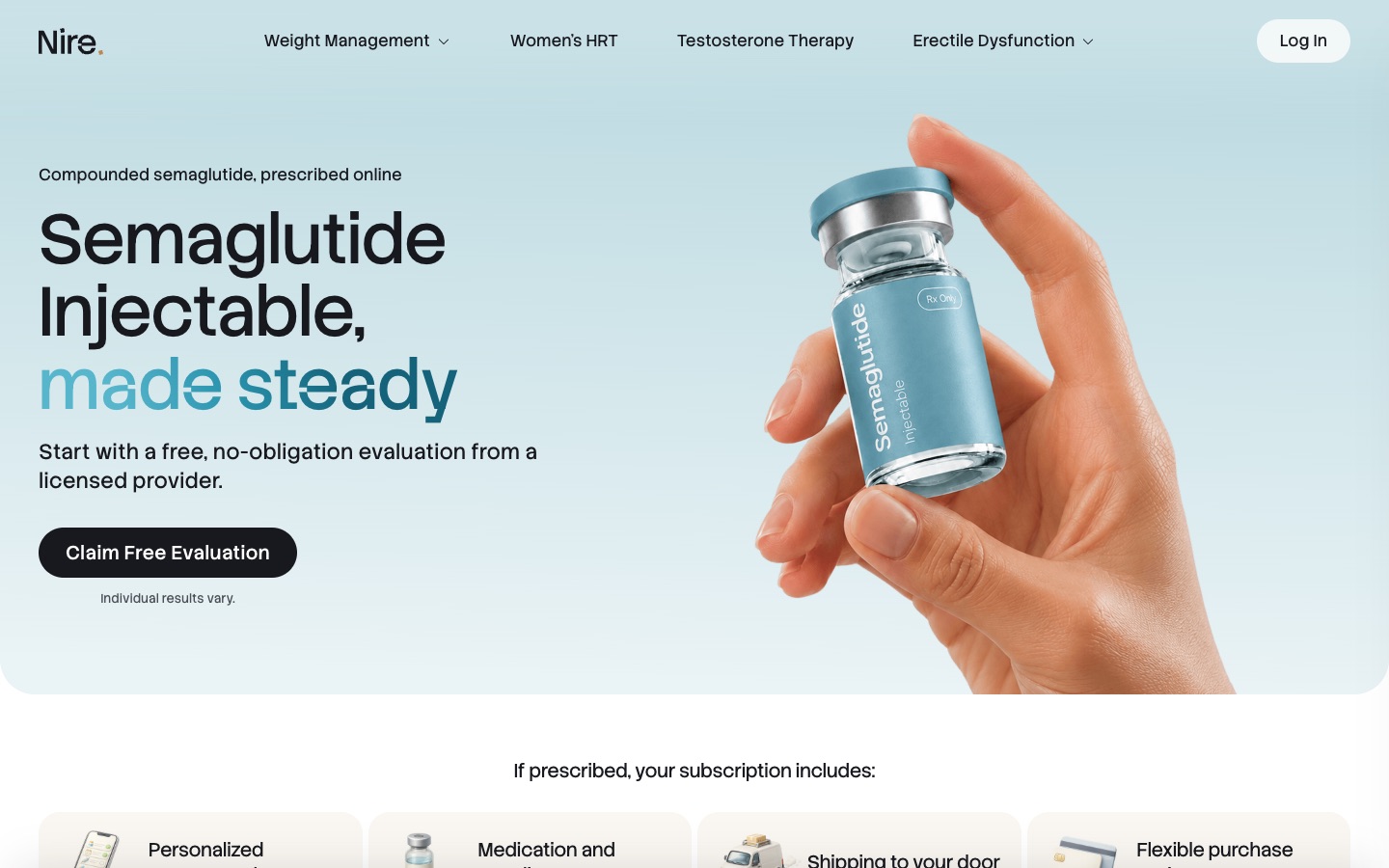
A hub page plus one page per compounded medication. Each carries the disclaimer, an "Individual results vary" line, and a link to its safety page. These were the highest-exposure pages in the audit.


What patients see now
Hormones and sexual health
Same templates, a different accent per treatment area, so a fix to one component lands on every page. Women's HRT stays "Coming soon" until the partner's intake supports it: no promise the product cannot keep.


What patients see now
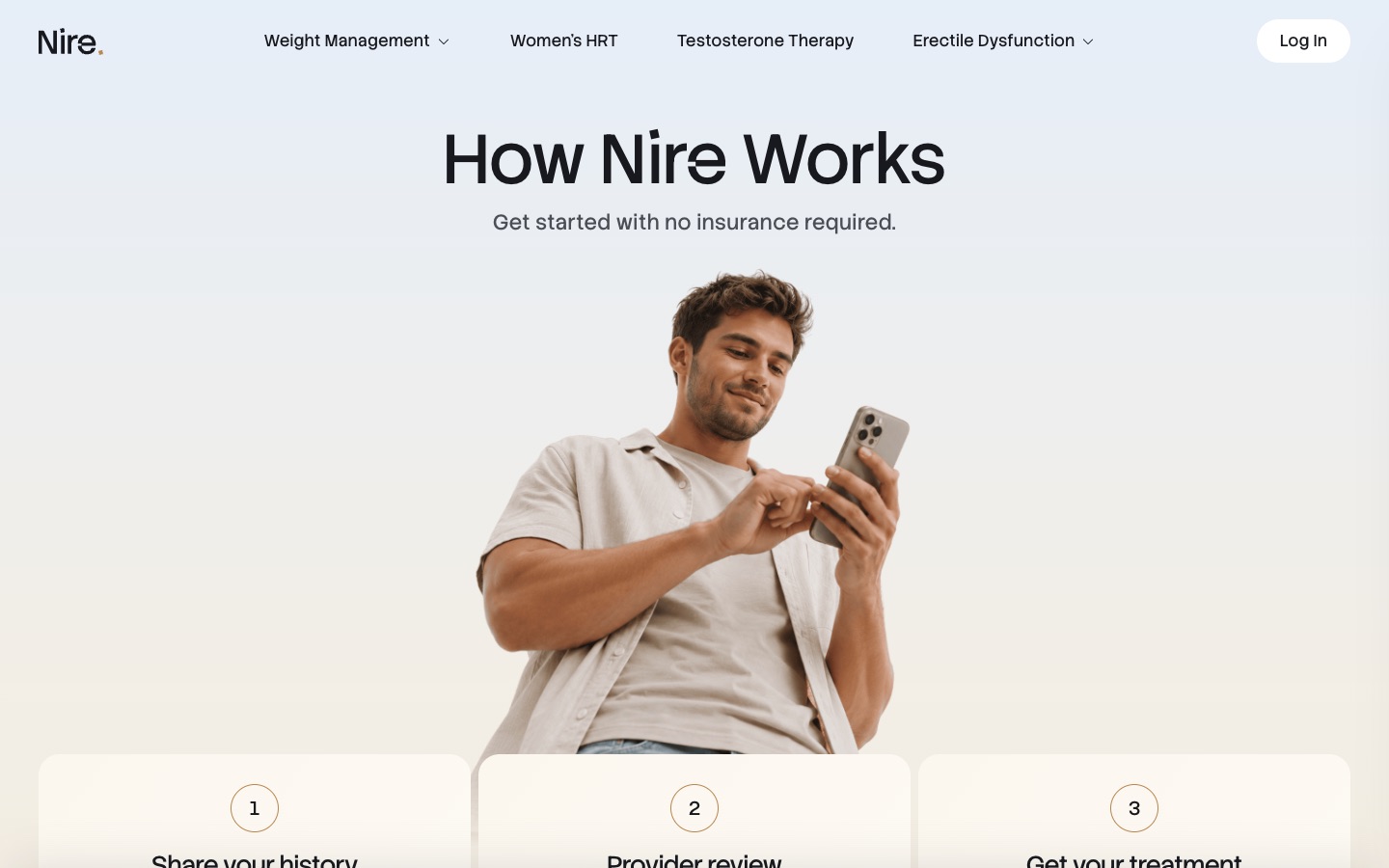
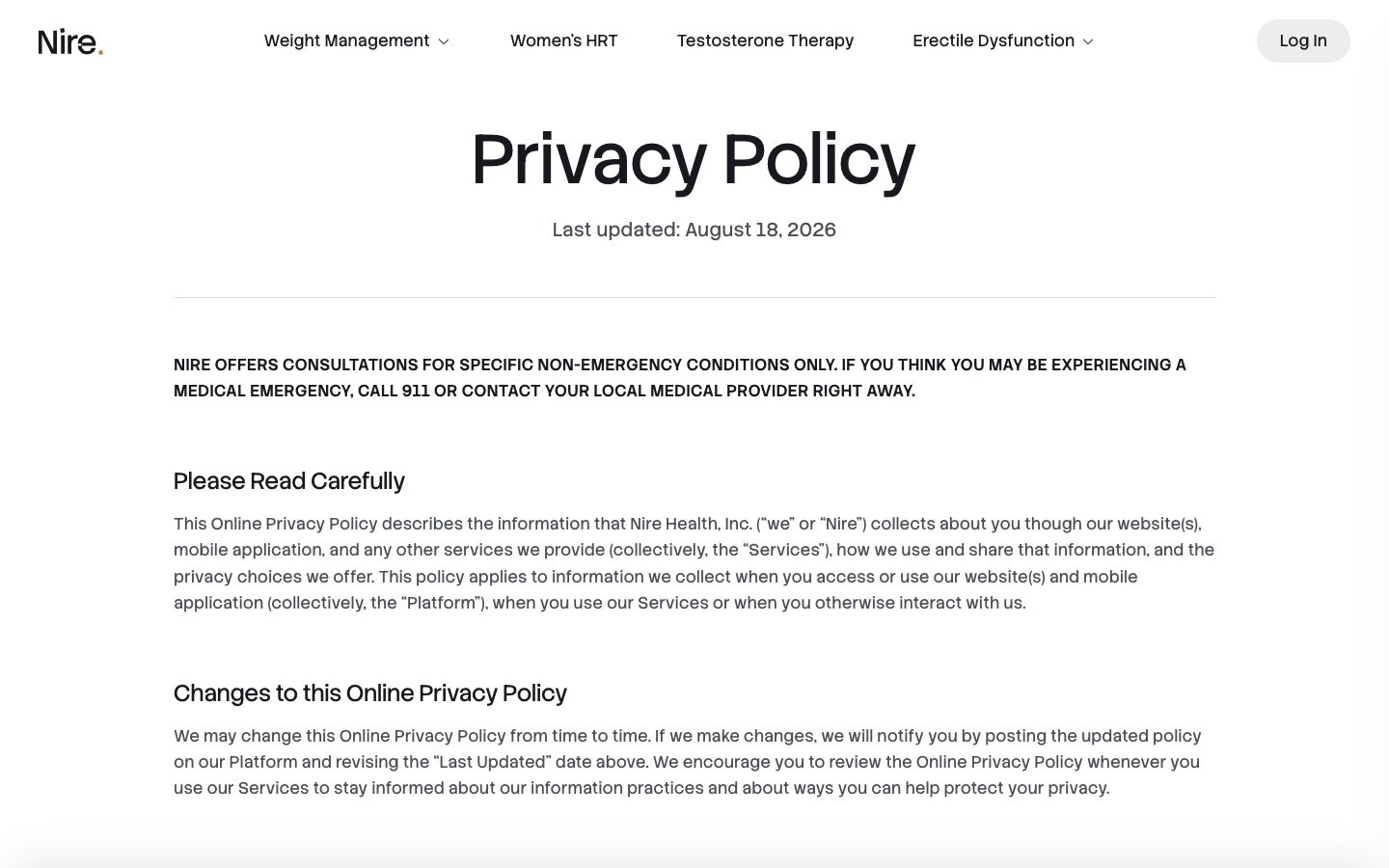
The pages that build trust
How it works, who we are, FAQ, contact, per-product safety information, and the legal set in the same design shell. This is where a hesitant patient goes before starting an evaluation, so it got the same design attention as the treatment pages.


Before and after
Claim the process, not the outcome
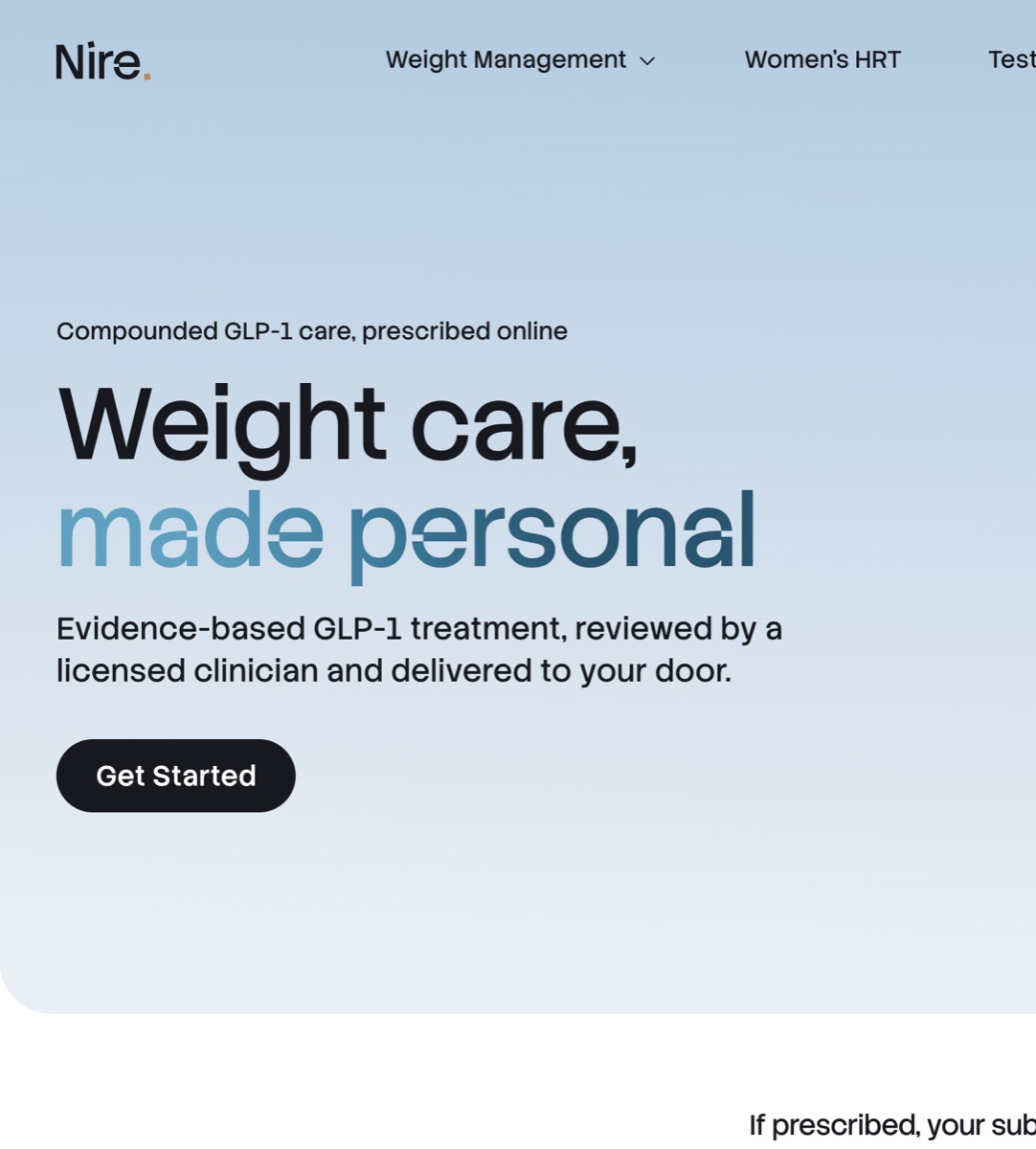
Problem: "evidence-based" is an efficacy claim, and no clinical studies exist on compounded semaglutide. Decision: say what actually happens to the patient. A licensed clinician prescribes and oversees treatment, which is a real differentiator. "Individual results vary" was added under the call to action.

GLP-1 hero. "Evidence-based GLP-1 treatment, reviewed by a licensed clinician and delivered to your door."
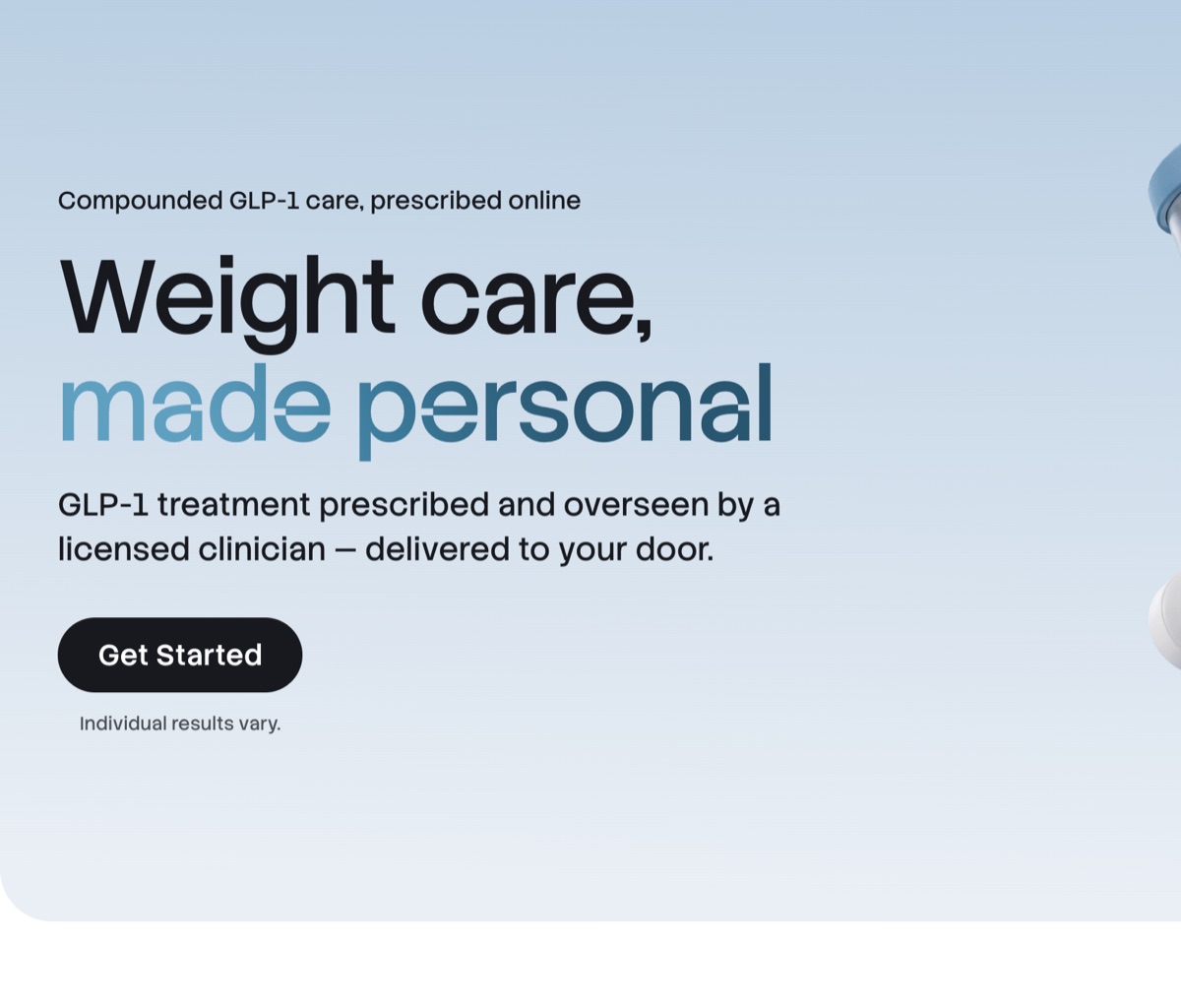
Shipped. "GLP-1 treatment prescribed and overseen by a licensed clinician, delivered to your door." plus "Individual results vary."
Before and after
One word, five pages, one fix
Problem: "safe" carries legal meaning tied to FDA approval, and the bullet shipped on five weight-loss pages. Decision: rewrite it once in the shared content fixture so every page changed together, and drop the drug name from the bullet so no page implies per-drug suitability. "Zero financial risk" became "No cost to start", a claim the pricing actually supports.

Five pages. "Find out whether semaglutide is a safe, appropriate fit for you." and "Zero financial risk".

Shipped. "Find out from a licensed provider whether treatment is appropriate for you." and "No cost to start".
Before and after
Earned trust in, borrowed trust out
Problem: the footer showed a LegitScript seal linking nowhere, a HIPAA badge, and a pharmacy seal, none substantiated, while the disclaimer required on every weight-loss page was missing. Decision: remove the seals until the certifications exist, and add the disclaimer plus the Florida consumer bill of rights to the shared footer, so it appears on every page and cannot be forgotten on a new one.

GLP-1 footer. Three trust seals, no disclaimer.

Shipped. Full disclaimer text plus "Florida residents: see the Weight-Loss Consumer Bill of Rights."
Removed and added
Trade invented proof for real information
Problem: a 4.7-star rating, "2,400+ reviews", five placeholder quotes, and a dead "View reviews" link, in a category where fake reviews carry per-violation penalties. Meanwhile "important safety information" was promised but rendered as plain text. Decision: remove the social proof entirely and invest the space in six per-product safety pages. Fewer stars, more trust, and a section that comes back the day verified reviews exist.

Home. Invented rating and review count with placeholder quotes.
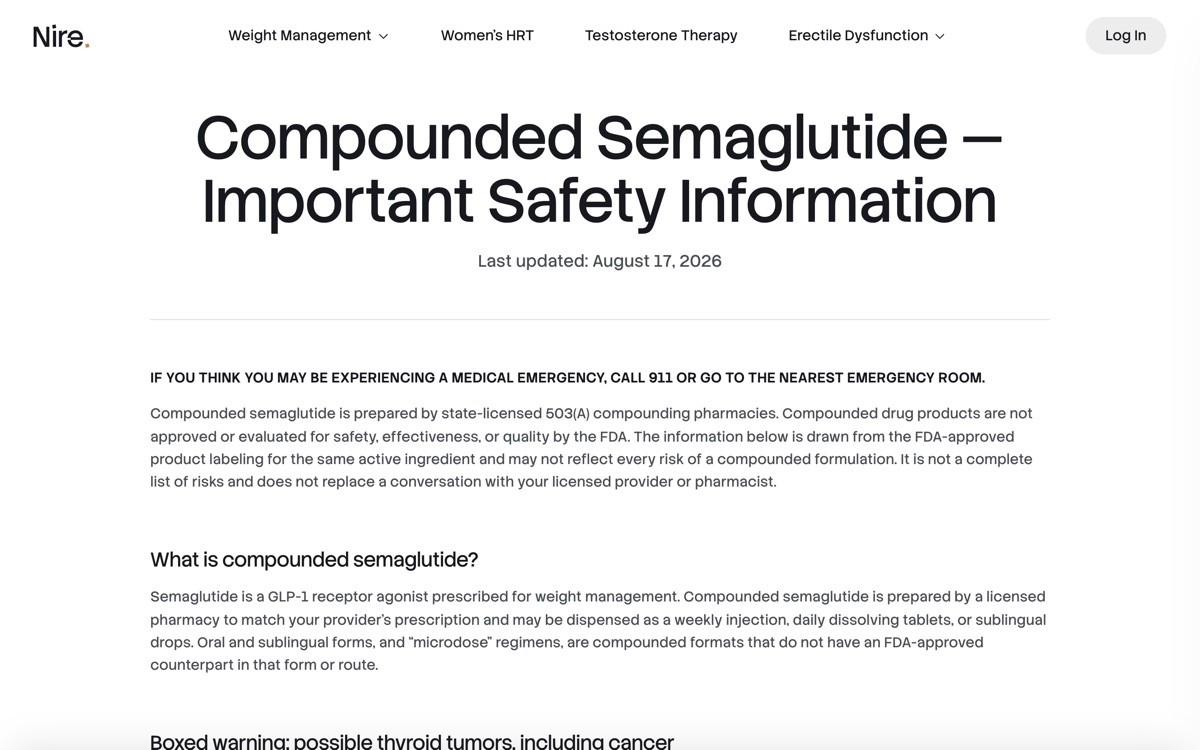
Safety pages. What the medication is, who should not take it, side effects, and when to seek care.
What comes next
Measure, then optimize inside the guardrails
- Measure the funnel from paid social to the partner's evaluation start, by treatment area, to see where compliant copy costs or earns conversion.
- Test within the rules. Disclaimer placement, safety-page entry points, and hero framing are all testable without touching a single regulated claim; the CI check makes that safe to iterate.
- Bring proof back honestly. Verified reviews and a real LegitScript certification are tracked items with business owners; the components are ready to return when they are earned.


Phone-first: most telehealth traffic arrives from paid social on a phone, so every component defines its mobile behaviour.
Esther Mirzakhanyan
Product manager who vibe codes. I come from marketing and growth, I run subscription products on controlled experiments, and I build with AI coding agents so a spec becomes a working, reviewable product the same week. Happy to walk through the tracker and the guardrails live.
Screenshots are from the launch build and the audit evidence set.